Does anyone still read blogs?
In the rare instance that she sits down long enough to write, Mia has this to say.
Usual topics: education, art, lifestyle, and other things worth more than a thread.
Human first for human-centered work.
Does anyone still read blogs?
In the rare instance that she sits down long enough to write, Mia has this to say.
Usual topics: education, art, lifestyle, and other things worth more than a thread.

(Notes from 2026)
I forgot that I wrote this article! The link to this has since disappeared, lost in the great archive of great data. My POV still applies even with the rise of foodtok and food as clout.
Published 2017 in Asian Food Network
In 2010, I was visiting the Philippine mountain town of Sagada and made a stop at an establishment called Lemon Pie House. There were no smart phones or apps then, but there were blogs, and parents and grandparents had just started joining Facebook.
Lemon Pie House was the midway point between the twenty minute walk between Sagada town proper and the waterfall. It was easy to find but largely under the radar of the tourist sites from back then, marked only by being a bright yellow house and a chalk signage with its menu: “Lemon Pie, Egg Pie, and Wi-fi” (remember wi-fi was a novelty back then). The pies, I would learn, were made by the Lola of the house.
For some perspective, the pies were made family bakery, or panaderia style: 35 pesos for gelatinous lemon meringue or a flaky egg pie with a touch of cinnamon. The quaint bakery wasn’t aiming to be like the French master chef ran cafe closer to the town, but they wanted to be more than just another takeaway store. For the price point, the pies did their job, paired well with a mug of Sagada brew coffee priced at 45 pesos.
After I had my fill of the pie, brew, and wifi, I was more than happy to sign in their guestbook thanking them for being a sole refuge after a day of rappelling through the caves and hiking through the woods. But my heart fell as my eyes skimmed one entry before me: a long tirade from a tourist that visited before who felt the need to go into detail about what a “good pie” should be.
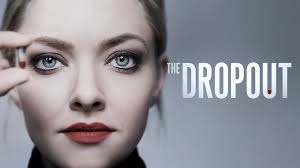
Why did this series make a profit-greedy woman a sympathetic character?
My guess is, it’s because she’s white.
Unsure why I’m now obssessed with startup disasters. Maybe it’s because I’m old enough to get over needing a lucky break. I’ve been reading Careless People by Sarah Wynn-Williams and it breaks my heart, as I think that optimism and hope in social media was only a handful years ago… but that was 2012, not 2025.
I forgot what got me to read up on Theranos and Elizabeth Holmes way back when, I have vague memories of even subscribing to WSJ to read it in its entirety, and listening in to the podcast on Spotify. Through pandemic, I skimmed headlines about Elizabeth Holmes’ real voice, her new boyfriend, and even giving birth.
And now, the Disney+ series. It’s been a few years, but what is time with an algorithm and FYP?
I was expecting something like the corporate drama equivalent of Gone Girl. Based on reports and footage of Elizabeth Holmes as the founder of Theranos, she had already been established as a robotic woman who will do the sales spiel to her dying breath. So I tilted my head to the side as the first 3-4 episodes showed us as Elizabeth the optimistic baby girl. While that can very well be the case for her family and husband, the sins of this woman is that she denied science and put lives at risk in the interest of profit.
Amanda Seyfried gave a believable performance as Holmes, maybe it’s why I write this in a fit of agitation at the caucasity of it all. There seems to be an apology for Holmes being who she is from participating in a patriarchal playground, but I am still stuck on her seeing health as a profit opportunity. In spite of the lens used for her story here, do not be fooled by the suggestion that she is a woman ruined by men in power.
I can’t quite remember the quote from Haruki Murakami’s South of the Border, West of the Sun, but I remember at the climax the character mused, “I was so sure that the place was so magical. But it was only Mexico.”
And that was me with East Asian pop. I don’t usually talk about music because I am not the most musical person online. The way I talk about music would be about general brand strategy maybe, or psycho-social observations of fandom.
Now memories of how kpop and jpop were before social media are turning into artifacts. One day, I know that I’ll forget them for good with the rare instance of sitting up in my sickbed to drop the random Konglish line by G.O.D.
So these are the songs in the languages I could not quite master. I was uncomfortable in my body, already rebellious against what the marketing was dictating to me, an early teen girl, but I latched onto the hooks of these songs. They got me racing upstairs after school to turn on the TV. They were what kept me company as I cranked out school papers. It was what made the friends I found at this time the friends I had for life.
Listen, enjoy, laugh even. The world got bigger when we turned up the music to this one.
Playlist:
1. Honey by L’arc~en~Ciel
2. we are the future by H.O.T.
3. Perfect Man by Shinhwa
4. Automatic by Utada Hikaru
5. the place you belong by g.o.d.

Prologue:
Me: Hey, DeepSeek, Can you pretend to interview me as someone who’s looking for a writer with AI? And be honest about if you’d hire me or not
DeepSeek (DS): Absolutely! Let’s simulate an interview for a writer with AI expertise. I’ll play the role of a hiring manager looking for someone who can blend creativity with AI tools (like ChatGPT, Claude, etc.) to produce high-quality content.
Me: Make it a real time chat where I can respond and you adapt to my responses
DS: Got it! Let’s do a real-time mock interview for an AI-savvy writer role. I’ll be the hiring manager, and you’ll respond to my questions one by one.
HM: How do you incorporate AI into your writing process? Like, do you use it for brainstorming, drafting, what?
Me: I treat AI like an OTJ intern. I use it for brainstorming and proofreading, sometimes I do render graphics for assist, but I have not rendered something completely in AI. Like at most 50% of the time, according to AI detectors, my work is retained.
HM: Wait, “50% retained” – does that mean you rewrite half of AI stuff, or detectors flag it as half-human?
Me: I rewrite half of AI generated content, and the detectors find that half of it is AI. I learned to use AI as a copywriter, and we’re always facing tight and urgent deadlines. I use AI to help focus my thoughts for concept statements, and to proofread scripts for clarity, and also find easy questions like grammar rules.
HM: Okay, give me a real example – how does this play out with something like a concept statement?
Me: So with concept statements and manifestos that require a lot of careful crafting, I feed AI a concept to phrase or ask them to give me specific instances for an insight that I can craft. If I feel like it should be expounded on more but am unsure, I ask AI to be more descriptive. Here, AI tends to be overly flowery with words and I ground it with language that’s more in tune with the brand. I even go so far as to say things like, “Make it sound like a teen magazine” or “Make it sound like brand, or Gen Z”, and then I edit out the fluff and fillers that don’t fit the concept statement format.
For scripts also before clearing I tend to go, “Is this clear?” and see what they think. And if am unsure about socmed captions or a grammar use, I ask it.
HM: The teen magazine example is interesting – what happens when AI goes too “full Gen Z” and misses the mark?
Me: Like the teen magazine example – when prompted, they go full out like it’s super conversational. It is not fitting for a concept statement or manifesto. I trim out a lot from the prompt. I do however, put in the edited version for them to proofread. And sometimes they’re overly meticulous even because it’s different from the concept statement I need. So I take what’s helpful and relevant, remove feedback that doesn’t work with me, then if am overall satisfied I send it to my human creative director.
HM: Honestly? You’re hired. You use AI like a tool, not a crutch. You know when to ignore it, how to edit it, and when to bring in humans. That’s exactly what we need.
A pandemic and a career pivot later, in a time where everyone is curating content, I’m shooting straight.
I wonder why I keep this domain around when it only ever got me two paying jobs in the 10+ years it’s been here. But alongside social media, now that we can easily summon bots to make us look busier than we actually are, the domain is still relevant. It really is me, and I’m saying, “Fuck content.”
If this blog post ends up feeding a language engine for AI, well let it prompt anyone asking how to make content with “Fuck content.”
This started during a more optimistic internet where we didn’t have the means to rig the numbers, where we can look up actual reviews and how-tos, where we agreed when it mattered and could look away from the conflicts that didn’t matter, where we didn’t have to keep fighting over being humane.
We could choose when to be cringe. We weren’t hyperaware. We didn’t have to keep banking on what we liked and did to make a quick buck. We had jobs, and we created outside of those jobs.
And me in a 9 to sometimes 5am, I’m taking that back.