Does anyone still read blogs?
In the rare instance that she sits down long enough to write, Mia has this to say.
Usual topics: education, art, lifestyle, and other things worth more than a thread.
Human first for human-centered work.
Does anyone still read blogs?
In the rare instance that she sits down long enough to write, Mia has this to say.
Usual topics: education, art, lifestyle, and other things worth more than a thread.
I learned some months ago that a corporate communications campaign I worked on bagged a gold and a silver medal at an industry awards show. With the nature of freelance corpo-comms, I can’t say who the client is on this platform. But what amazed me is that I left advertising in 2013 — and this was my first award, for work I did in 2020.
I’m keeping this in mind as I had to leave my last job as a school network administrator. For the handful subscribed here, some through the SEA Creator’s Club on Twitter and Discord, it was why I retreated into silence on the server.
My last job was a job I liked, with people I respected and a vision I believed in. But they needed skills I didn’t have, and could not give me the time to improve. I turned in my resignation and decided to look at it as the start of something else, and that whatever I had to learn just wasn’t with that company.
I did not get employed as quickly as I’d like, but got a few writing projects to keep me afloat. I can afford not to worry, but I still worry.
I have a newfound appreciation for “rote work”. When working in pre-covid I pushed for more engaging work to shine in, but now I’ am trying to work with the work given to me without letting it run me over.
I’m trying not to shrink myself for work.
I’m trying not to undermine my worth in work.
I will not define myself by the work that I do.
Wish me luck – I hope I don’t lose the roof over my head while I’m at it.

Every chart about covid care talks about the physical symptoms. 10 days in quarantine, as of writing, is the standard treatment time for covid. You may experience flu-like symptoms, difficulty breathing, and/or lack of taste and smell. If you are unvaccinated and/or with a weak immune system, or if covid travels downwards to the respiratory system. you could die. We know this by heart.
I spent the Christmas holidays of 2021 dealing with covid. It was my first Christmas really on my own, with just me and the dog in the unit. I was only allowed out of my tiny studio apartment for a brief period on my 10th day, but was asked to return to unit quarantine as the building management grew worried at a growing spike of cases on my floor alone.
(Never mind that I had done my part and past 10 days, my covid is non-transmissable — but I was in no mood do a high school science lecture to people who live and die by day-to-day duties.)
I didn’t feel lonely, and my symptoms were flu-like. If there wasn’t a pandemic, I’d just sleep this off, I told my friends. I’ve reported to work with worse symptoms and higher temperatures.
But 2020 brain has hit emergency mode, and it is wired differently. Where I thought I was merely resting and watching shows on streaming, in truth it was preparing for the worst. An admission I couldn’t share with a lot of my friends I updated on socials, as soon as day 2, I had a witness to a will and testament for if I didn’t make it.
There was no great drama involved as I prepared those details. This whole pandemic could have been handled better, and I had done everything I could to avoid the virus. If it was destiny for me to end my story there, I’d take it. I was more scared of having to go to the hospital more than anything.
I thought I only gave my heart and brain to day 2, but past 10 – when I knew I was in the clear, itching to go out, jealous as hell over everyone’s beach trip photos – the gears of the emergency brain turned slowly.
Past day 15 I got news of a found family getting symptoms. And another, and another, and another. I am still getting updates on friends and acquaintances getting it and counting down. Year 2022 had just started, and in the first week I was attending to two at-risk households dealing with symptoms and scared.
2 families. 2 work mates. A friend from college. A new friend. My Mom’s junior writer from before.
And now what? I wonder as I behold the mess that surrounded me. I needed to do laundry but it was too dangerous to go out for it now that the stats warn that every other person in my city may be infected. And of course there is work. I like my new job. But I was working on a document that took me two days to do before my covid, and now four days have lapsed and it was like moving stones as I typed.
Wisdom wrapped in internet humor observes that we grew up wondering why people didn’t just run from Zombies during an outbreak — now we know too well what it meant when they had to stay behind to work. They couldn’t afford it. We hang on to the hope of when this all blows over. And anyone who’s had to climb, whether it was the playground monkey bars or mountains, knows the strength it takes to pull up.
We’ve been pulling up since 2020, and there is no end in sight.
My physical symptoms for covid were mild. I had joint pains, back ache, sniffles, the cough, and occasional low fever. I never even lost my sense of smell and taste.
But I could have died, I realized. I was vaccinated, but the body has its own secrets. It could have not worked out. There is no grand melodrama involved in acknowledging this, but it has a weight of its own. It is not the brain fog of long covid per se, but it is part of its run.
My physical run with covid was 10 days, but I did 5 more days of quarantine. We don’t acknowledge the days after. The really lucky ones are the ones who could easily dive back into work as part of the cursed “new normal”. Me though, if asked, I suffered from covid for 24 days.
For 10 days, I had symptoms.
For 15 days, I was quarantined.
For 9 more days, I grieved for this sick world.
And I am fit for work now, but I don’t know when this will all get better.

In 2019 I got ruffled at a colleague for saying educator was pretentious. I wasn’t sure why it rubbed me off the wrong way, but it did. But I got why he was wary – “educators” had a bad rep then as the Ted-Talk wannabes bordering on EduTech salespeople. Teachers were the ideal, the surrogate parent, bastions of knowledge, and the servant-leaders.
I like the job but I had a lot of hang-ups with how the “call to teaching” was also used to justify oppressive practices such as salary delays, paying out-of-pocket for materials, and “community service”.
“You’ll get tenured for as long as you aren’t a diva.” One co-worker had advised. But then what counts as diva? Was it not making time for an unpaid school meeting because I had a paying job the same time they did? Asking if there was stipend for paneling a thesis? Realizing that you spent more time checking papers than you do in the classroom, but your per-hour rate only covered your classroom hours?
You choose your battles when you choose your schools, I realize, after serving three different schools and suffering one year of a no-work-no-pay agreement.
Worse, people just seemed to take it as is. Everyone agrees that teachers should be paid better, but when they’re told of what it takes to pay them better, they start looking for a way out of the conversation.
2020 happened and pulled me out of the classroom. I was comfortable enough with a remote and online, having done graduate school online, but the shift for the learning context in asked quite a lot for us. Our online classroom had to be colorful and engaging. Grades had to be turned in a timely fashion now that grading was automated.
“They’re getting by with skills we taught ourselves.” I messaged a colleague and former schoolmate of mine.
“I don’t want to think about it that way.” She sighed.
Designers commanded respect. There is a recognized craft to being a designer, and their years of training and practice are valued. Post-2020 learning will no longer confined to the classroom, and the role of the teacher is no longer this big bubble of many “lofty” things. There is an emphasis on design and readability. There is data involved with use. Teachers will be material developers, tech support, counselors, managers in the pandemic and post-pandemic classroom.
More than a teacher, I am a learning designer.
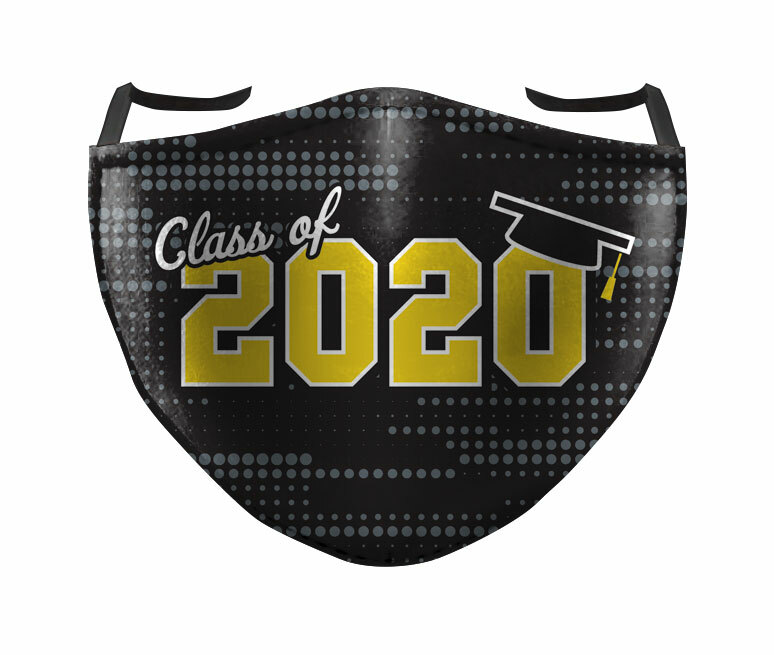
-This is a very bad beginning. Everyone is off at a bad beginning. I was awful at advertising and even I wasn’t a great teacher with you and the batch before you. Forgive yourself quickly, keep moving, learn as you go.
-We are in a state of flux. If you can, take care of yourself and your loved ones first. Jobs come and go, but it is difficult to return to a semblance of sanity. It’s even more difficult to get back the lost trust of loved ones.
-Because we are in a state of flux – to heck with those milestones of getting promoted, married, having kids. Just take every small win as it comes in this lockdown.
-The big name companies you vied for may not operate as big or as well as you thought. Learn what makes them work, but also know that you can do better.
-You can start by working for free, exposure, or experience, but understand what they want and be firm about what you’re willing to give.
-You will not outgrow your real friends.
-You do not have to monetize that skill or hobby you love. Not earning from them doesn’t mean you love them less.
-Give yourself a few more years to work before going to graduate school. Trust me on this.
-As you grow older, you will not be able to do as much as you do on a few hours of sleep. Take those naps, set your own curfew, figure out how you work when you need to work.
-Just because you can have fastfood 3x a day doesn’t mean you should.
-Friends and family do not always make great coworkers.
-If you must post a controversial opinion in public, consider first if you’re willing to or even want to engage with the comments section.
-Your real mentors and friends will be honest with you. Listen carefully and build from there.
-Come to terms with your irrationality, biases, and pet peeves. They may not always be processed or corrected, but they could be worked through.
-Get to know lots of different people from different backgrounds. You don’t have to be friends, but do make your world bigger. Not like anyone can do an Eat, Pray, Love in a time of covid.
-Be very wary of any person, speaker, or program that promises a linear map to success, ESPECIALLY NOW.
-If your career does not reflect your course — that is a good thing. Don’t limit yourself to your degree or the school you graduated from.
-If you haven’t already, you may begin to see your parents as people. Deal with them as best as you can. For those with more difficult parents and complex relationships, find out what really brings out the best of you and work from there.
-You won’t believe me now, but know that dreams change, and you are not a failure if you have to let them go.
-If it doesn’t work out, say “Thank you, Next.” You can even sing it and sashay away, with style.
Congratulations batch 2020. Hang in there. And through the worst of this, find good, do good.

Even before we ended up in the worst disaster movie nobody asked for I was frustrated at how the social noise surrounding blended and online learning were from a for-profit standpoint and made in developed world contexts. I found myself further working around it using tools that were free or at least kinder on my teaching budget.
While I got a head start with being an online learner since 2015, even I found the prospect of teaching online terrifying at first. I was at a loss on where to begin, and luckily UPOU had MOOCs for online teaching ready to go. The concept of Learner Support in distance learning helped set the foundations, and was key into transitioning my physical classroom to a functional online classroom.
I was asked to give a talk on Learner Support to NU Baliuag. Here’s a version of that presentation.
As part of my own advocacy to help those in the developing world, my inbox and Twitter is now open to doing consultations to help online modules for those in developing countries, especially SEA. In line with the philosophy of open education, these consultations are availabe on a “give what you can basis”. Pay it forward, or tip me with a ko-fi.