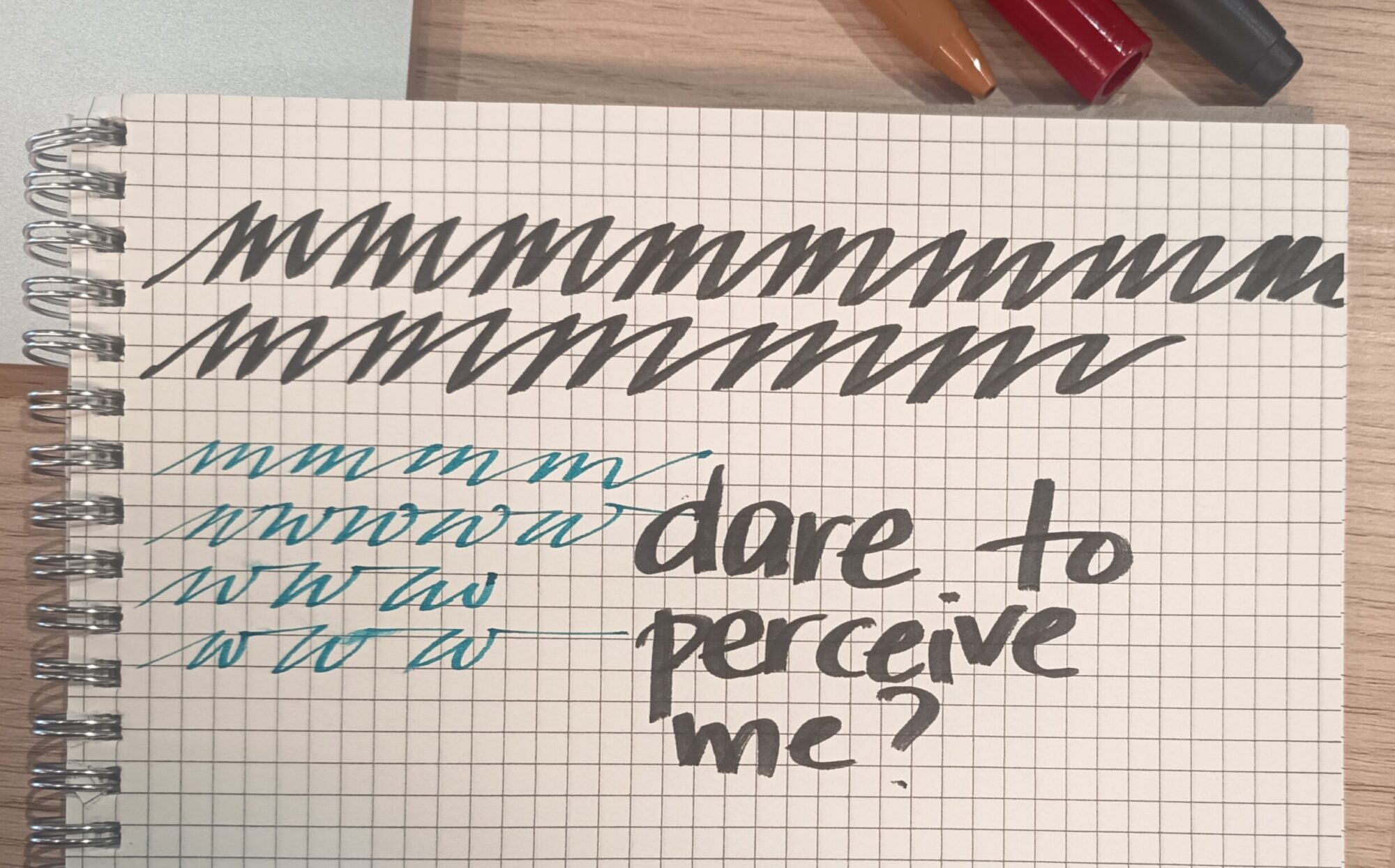
Poem on a Rainy Day

Just a little something that dawned on me while whiling away at Cara Mia Galleria.
An impertinent start
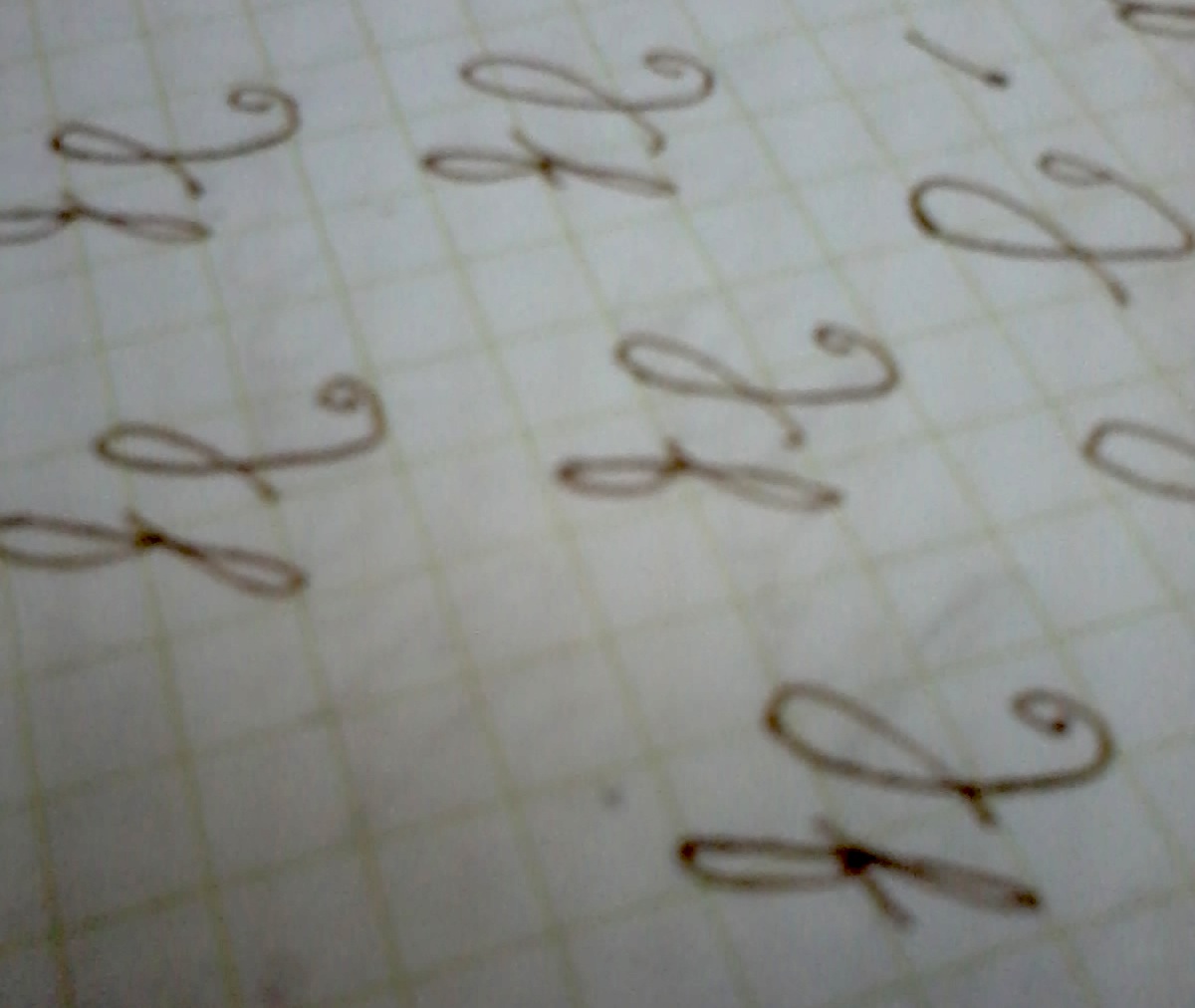
When a Tachikawa School-G is good, it’s very, very, good. When it’s bad, it’s horrid.

I have named my Tachikawa School-G after Akane Tendou, the “uncute” and unlikeable female lead of anime classic, Ranma 1/2. For the first week I had her, even though I plugged in a brand spankin’ new ink cartridge, she just refused to write.

As Akane was adopted from another pen owner, I wondered if perhaps, she froze up for good after not being used for a while. But a quick google search revealed that all School-G pens tended to do that. I put two and two together and gave a nib a quick wash. It did wonders.

While the School-G best serves budding comic book artists and illustrators, it also makes for a great entry-level fountain pen. Some patience required, but quite worth it.
I spent about a month with uncials and Romans with a Schneider Creactiv, so the month of March will be for cursive, with the School-G as my main pen. Let’s see how it goes.
Rome wasn’t built in a day
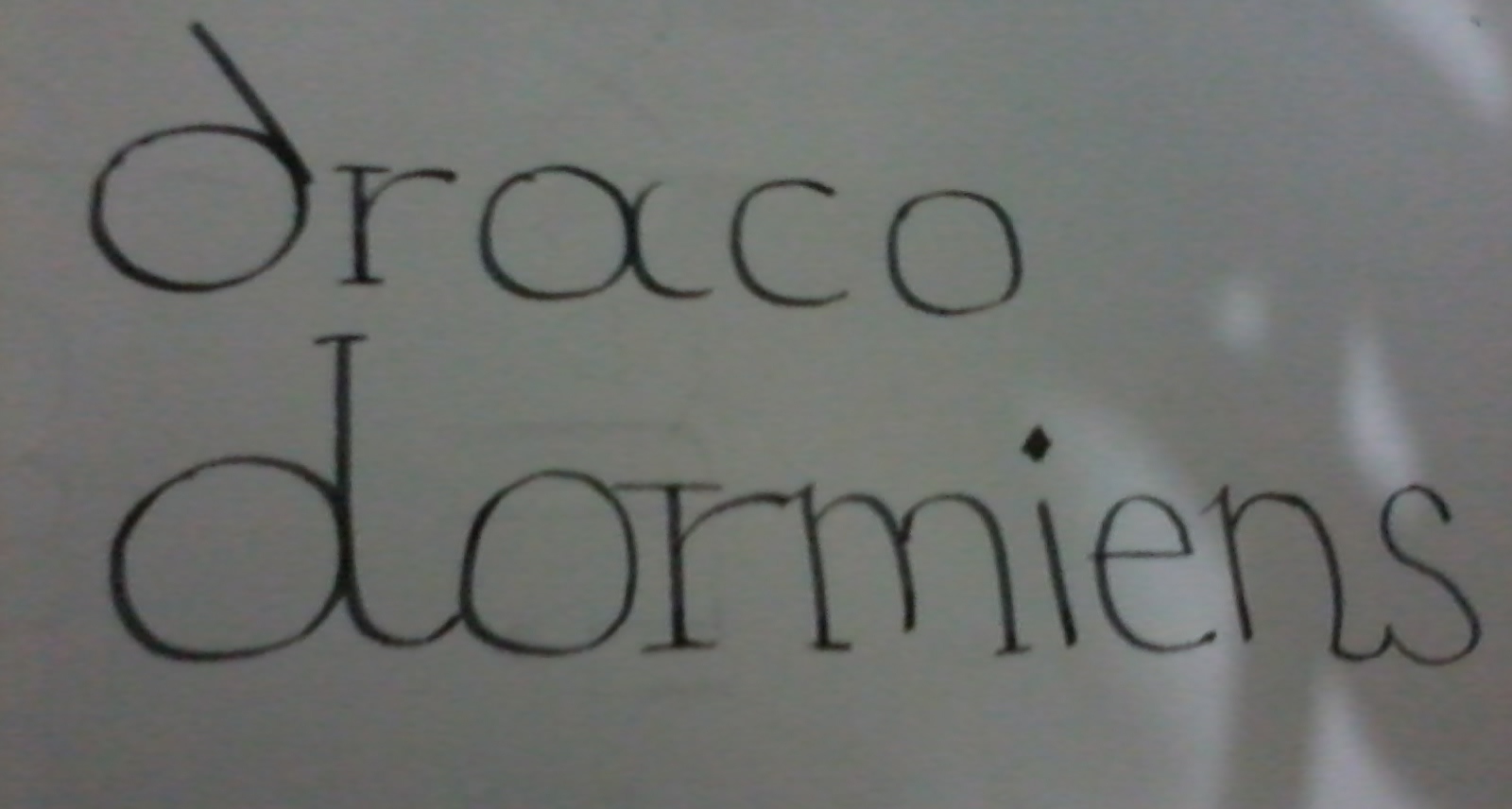
Tips for beginning calligraphers, from a beginner calligrapher.
I swore that I would not buy new pens and inks until my calligraphy got better. I also figured I’d be kinder to myself and start with Roman lettering and calligraphic print instead of jumping into Copperplate. I used ye olde ‘Writing & Illuminating & Lettering’ to start. You can download the book for free at archive.org.


When I write in Latin, I have that scene from ‘Life of Brian’ running through my head.
Some things I figured, while destroying trees (with use of paper) in the name of pretty:
-It helps to start with just the symbols and some flourishing before moving on to the alphabet. It teaches pen control, and builds the strokes for when you finally start on lettering.

-Practice, practice, practice. They’re not meant to be perfect at the get-go.
-Be kind: you can start with Roman print before jumping to Copperplate script. It makes re-learning the script easier, even faster.

-You CAN start with a pencil and a math notebook. Get used to which stroke to start with, then you can practice flex with your fountain pen.
That’s it so far. It’s not much now, but I’m hoping it’ll be better. It has certainly been fun though.
What helped you when you started calligraphy?
Good Starting Calligraphy Resources:
Rome wasn't built in a day
Tips for beginning calligraphers, from a beginner calligrapher.
I swore that I would not buy new pens and inks until my calligraphy got better. I also figured I’d be kinder to myself and start with Roman lettering and calligraphic print instead of jumping into Copperplate. I used ye olde ‘Writing & Illuminating & Lettering’ to start. You can download the book for free at archive.org.
When I write in Latin, I have that scene from ‘Life of Brian’ running through my head.
Some things I figured, while destroying trees (with use of paper) in the name of pretty:
-It helps to start with just the symbols and some flourishing before moving on to the alphabet. It teaches pen control, and builds the strokes for when you finally start on lettering.
-Practice, practice, practice. They’re not meant to be perfect at the get-go.
-Be kind: you can start with Roman print before jumping to Copperplate script. It makes re-learning the script easier, even faster.
-You CAN start with a pencil and a math notebook. Get used to which stroke to start with, then you can practice flex with your fountain pen.
That’s it so far. It’s not much now, but I’m hoping it’ll be better. It has certainly been fun though.
What helped you when you started calligraphy?
Good Starting Calligraphy Resources: